
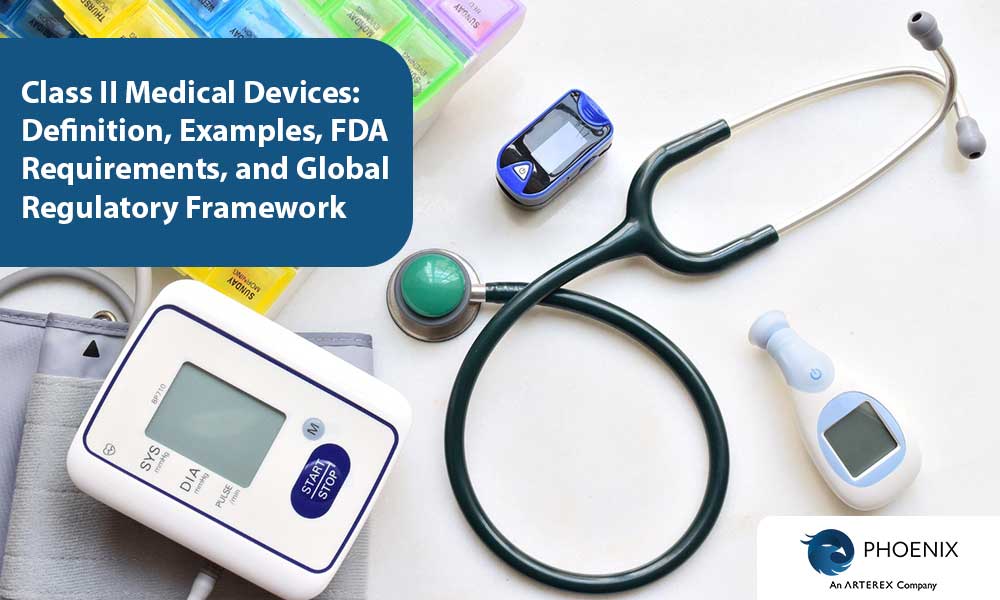
Class II medical devices occupy the moderate-risk tier of the FDA’s three-class regulatory system. They include widely used products such as blood glucose monitors, ECG machines, hearing aids, infusion pumps, and pulse oximeters. Unlike low-risk Class I devices, Class II devices require both general controls and special controls to ensure patient safety and effectiveness.
Most Class II devices reach the U.S. market through the 510(k) premarket notification pathway, which requires manufacturers to demonstrate substantial equivalence to a legally marketed predicate device. Alternative pathways include De Novo classification, Premarket Approval (PMA), and the Humanitarian Device Exemption (HDE).
FDA requirements cover the full device lifecycle: premarket submission, Quality Management System compliance under the QMSR (21 CFR Part 820), labeling under 21 CFR Part 801, Unique Device Identification (UDI), and postmarket surveillance obligations including Medical Device Reporting (MDR).
Globally, Class II devices are regulated under comparable frameworks by the EU (MDR 2017/745), Health Canada, Australia’s TGA, and Japan’s PMDA, each with distinct submission pathways, timelines, and quality system requirements.
This article covers everything manufacturers need to know to classify, submit, and maintain compliance for a Class II medical device across major global markets.
What is a Class II Medical Device?
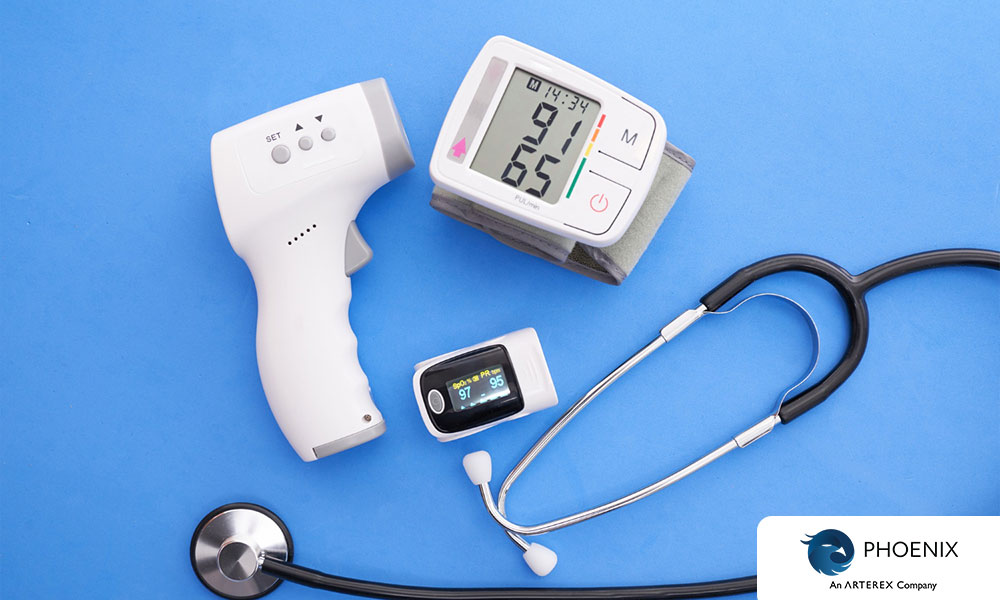
A Class II medical device is a medical device that poses moderate risk to patients or users — higher than Class I, but neither life-sustaining nor carrying the serious risk profile that defines Class III. Because general controls alone cannot assure their safety and effectiveness, the FDA applies special controls such as performance standards, postmarket surveillance, and device-specific labeling — tailored to each device type. The U.S. Food and Drug Administration (FDA) regulates Class II devices under 21 CFR Parts 800–898.
Most Class II devices reach the market through the FDA’s 510(k) premarket notification pathway. This process requires manufacturers to demonstrate that their device is substantially equivalent to a legally marketed predicate device.
Examples of Class II Medical Devices
Class II devices cover a broad range of diagnostic, therapeutic, and monitoring equipment used across clinical and home settings.
Diagnostic and Monitoring Devices
- Blood glucose monitors measure blood sugar levels in diabetic patients
- Pulse oximeters measure blood oxygen saturation non-invasively
- Electrocardiograph (ECG) machines record the electrical activity of the heart
- Digital thermometers and non-invasive blood pressure cuffs support routine clinical assessment
Therapeutic and Surgical Devices
- Infusion pumps deliver fluids, medications, or nutrients in controlled amounts
- Powered wheelchairs provide mobility support for individuals with physical disabilities
- Hearing aids amplify sound for individuals with hearing impairment
- TENS units deliver electrical impulses to relieve pain
Imaging and Other Devices
- Ultrasound transducers generate real-time internal imaging
- Pregnancy test kits detect hCG hormone levels
- Contact lenses correct refractive errors in vision
- Surgical gloves provide a barrier between clinician and patient
What is the Difference Between Class I, Class II, and Class III Medical Devices?
The FDA classifies medical devices into three categories based on risk level, intended use, and the level of regulatory control needed to ensure patient safety.
Feature | Class I | Class II | Class III |
Risk Level | Low | Moderate | High |
Regulatory Controls | General controls only | General + special controls | General + special controls + PMA |
Market Pathway | 510(k) exempt (mostly) | 510(k) premarket notification | Premarket approval (PMA) |
Examples | Bandages, tongue depressors | ECG machines, hearing aids | Pacemakers, implantable defibrillators |
% of FDA-Regulated Devices | ~47% | ~43% | ~10% |
Class I devices carry the lowest risk and are subject only to general controls such as proper labeling, manufacturing standards, and registration. Most Class I devices are exempt from premarket notification. Examples include elastic bandages, examination gloves, and hand-held surgical instruments.
Class II devices carry moderate risk and require special controls in addition to general controls. These controls include mandatory performance standards, postmarket surveillance, and 510(k) clearance in most cases. Examples include powered wheelchairs, blood glucose monitors, and infusion pumps.
Class III devices carry the highest risk and are subject to the strictest level of regulation. They typically sustain or support life, are implanted, or present a potential unreasonable risk of illness or injury. Class III devices require Premarket Approval (PMA), which involves a rigorous scientific review of clinical data to prove safety and effectiveness. Examples include implantable pacemakers, cochlear implants, and deep brain stimulators.
The classification system ensures that the level of scrutiny applied to a device is directly proportional to the risk it presents to patients and users.
What are the Different Premarket Submissions for Class 2 Medical Devices?
The FDA requires premarket documentation before a Class II device can reach the market. The correct submission type depends on the device’s risk profile, novelty, and whether a predicate device exists.
1. 510(k) Premarket Notification
The 510(k) is the most common pathway for Class II devices. It demonstrates that a new device is substantially equivalent to a legally marketed predicate in terms of intended use and technological characteristics. The FDA issues a clearance letter when substantial equivalence is established. The target review time is 90 days.
Three submission types exist:
- Traditional 510(k): Standard pathway for most Class II devices. Requires full performance testing, labeling, and device description data.
- Abbreviated 510(k): Uses FDA-recognized consensus standards or special controls in place of some performance data.
- Special 510(k): For modifications to a manufacturer’s own cleared device, using design controls to show the change does not affect safety or effectiveness.
2. De Novo Classification Request
The De Novo pathway applies to novel, low-to-moderate risk devices with no predicate. When granted, the FDA classifies the device into Class I or Class II and establishes device-specific special controls. The newly classified device then becomes a predicate for future 510(k) submissions. The target review time is 150 days.
3. Premarket Approval (PMA)
PMA is primarily a Class III pathway and the most rigorous premarket submission process the FDA administers. Unlike 510(k), it requires manufacturers to independently prove reasonable assurance of safety and effectiveness through valid scientific evidence, including clinical trial data, rather than demonstrating equivalence to a predicate. A complete submission includes device description, manufacturing information, labeling, non-clinical study results, and clinical data. The FDA has 180 days to review a PMA, though real-world timelines are often longer. For Class II devices, PMA applies only in rare cases where no predicate exists and De Novo classification is not appropriate.
4. Humanitarian Device Exemption (HDE)
HDE applies to devices that treat or diagnose conditions affecting fewer than 8,000 U.S. patients per year. Proof of effectiveness is not required, but the submission must show the device does not pose an unreasonable risk of illness or injury. FDA approval of a Humanitarian Use Device (HUD) designation is required before submitting an HDE application.
5. Investigational Device Exemption (IDE)
An IDE is not a market approval pathway. It permits a Class II device to be used in human subjects during a clinical investigation to generate safety and effectiveness data. Significant risk studies require FDA approval before the trial begins. Non-significant risk studies may proceed with Institutional Review Board (IRB) approval only.
FDA Requirements for Class II Medical Devices
Class II medical devices are subject to both general controls and special controls. Most require a 510(k) premarket notification, though a small subset is exempt. Requirements span premarket submission, quality system compliance, labeling, UDI, and postmarket obligations.
1. General Controls
General controls apply to all medical devices from the moment they enter the U.S. market. They include:
- Establishment registration under 21 CFR Part 807, renewed annually by all domestic and foreign manufacturers
- Device listing under 21 U.S.C. § 360 for every commercially distributed device, submitted electronically via the FDA Unified Registration and Listing System
- Prohibited acts compliance to prevent distribution of adulterated or misbranded devices
- Notification and repair, replacement, or refund obligations when a device poses unreasonable risk of harm
- Record keeping and reporting to support FDA inspection and oversight
2. Special Controls
The FDA assigns Class II when general controls alone cannot assure safety and effectiveness. Special controls are device-specific, identified in the CFR classification regulation for each device type, and may include:
- Performance standards covering electrical safety, biocompatibility, and EMC testing
- Device-specific labeling requirements including contraindications, warnings, and instructions for use
- Postmarket surveillance requirements tied to specific product codes
- FDA-issued guidance documents for the device category
3. Premarket Notification (510(k))
A 510(k) submission must demonstrate substantial equivalence to a legally marketed predicate device. Key components include device description, intended use, predicate comparison, performance testing, biocompatibility data, software documentation, and proposed labeling. The FDA’s FY 2025 performance goal is 90 days for a 510(k) decision and 120 to 150 days for a De Novo. Manufacturers have up to 180 days to respond to Additional Information requests.
4. Quality System Regulation (21 CFR Part 820 / QMSR)
The QMSR is mandatory for all Class II manufacturers and governs design, manufacturing, packaging, labeling, storage, and installation. Core requirements include:
- Design controls to document and validate the full design process
- Production and process controls for consistent manufacturing output
- Document and record control covering SOPs, quality records, and traceability
- Corrective and preventive action (CAPA) systems for nonconformances
- Complaint handling integrated into the QMS
The FDA harmonized 21 CFR Part 820 with ISO 13485:2016 in January 2024. The amended QMSR took effect on February 2, 2026.
5. Labeling Requirements (21 CFR Part 801)
All device labeling must be truthful, accurate, and consistent with 510(k)-cleared claims. Required elements include:
- Device name and intended use
- Manufacturer name and address
- Instructions for use and handling directions
- Warnings, contraindications, and precautions
- Sterilization and expiration information (where applicable)
- Software version information (for software-enabled devices)
Labeling must not imply performance characteristics not demonstrated through validated testing. Deviation from cleared labeling claims can trigger enforcement actions or reclassification.
6. Unique Device Identification (UDI)
Class II devices are fully subject to UDI requirements under 21 CFR 801.20(a). A unique device identifier must appear on the device label and packaging. Manufacturers must also submit required device information to the Global Unique Device Identification Database (GUDID) under 21 CFR Part 830 Subpart E. The UDI system supports traceability and enables faster identification during recalls or safety alerts.
7. Postmarket Surveillance and Medical Device Reporting (MDR)
Regulatory obligations continue after market clearance. Key postmarket requirements include:
Medical Device Reporting (21 CFR Part 803): Manufacturers must file electronic MDRs (eMDR) for device-related deaths, serious injuries, and malfunctions. Standard reports are due within 30 days. Urgent or FDA-requested reports are due within 5 days.
Section 522 Postmarket Surveillance Studies: The FDA can require postmarket surveillance studies for Class II devices involving safety risks, pediatric use, implantable applications, or life-sustaining functions.
Corrections and Removals (21 CFR Part 806): Recalls or corrections that reduce a health risk or remedy an FD&C Act violation must be reported to the FDA. Postmarket device or labeling changes may require a new 510(k). All change management decisions must be documented with a written rationale.
Global Regulatory Classification for Class II Medical Devices
Class II medical devices occupy the middle tier of the global regulatory hierarchy, sitting between low-risk Class I and high-risk Class III devices. These devices require a moderate level of regulatory control to provide reasonable assurance of safety and effectiveness. Special controls such as performance standards, post-market surveillance, and labeling requirements are applied to manage associated risks where general controls alone are insufficient.
United States: FDA
Most Class II devices require 510(k) clearance. The QMSR became effective February 2, 2026, aligning 21 CFR Part 820 with ISO 13485:2016. Key requirements include 510(k) or De Novo submission, QMSR-compliant quality system, special controls, MDR obligations, UDI registration, and annual establishment registration at an FY 2026 fee of USD $11,423.
European Union: EU MDR
The EU MDR (Regulation 2017/745) governs medical devices across EU member states. Class IIa devices carry medium risk and require a Technical Documentation Assessment Certificate from a Notified Body, a Periodic Safety Update Report (PSUR), and a Summary of Safety and Clinical Performance (SSCP). Class IIb devices carry medium-to-high risk and face greater scrutiny during initial review and postmarket oversight, requiring significant clinical evidence under MDR Annex XIV. Transitional timelines vary by device type: implantable Class IIb devices must comply by December 31, 2027, while non-implantable Class IIb and Class IIa devices have until December 31, 2028.
United Kingdom: MHRA
Manufacturers must obtain a UKCA or CE mark before placing a device on the GB market. The MHRA is updating its legislation with new regulations expected in early 2026, many of which align with EU MDR/IVDR. CE-marked devices compliant with EU MDD can be placed on the GB market until June 30, 2028. Foreign manufacturers must appoint a single UK Responsible Person.
Canada: Health Canada
Class II devices require a Medical Device Licence (MDL) before import or sale in Canada. The MDL application must include device description, intended use, labeling, performance testing results, and design control evidence. Health Canada’s target review timeline for Class II applications is 15 calendar days for complete submissions. As of April 1, 2026, the application fee is CAD $643 and the annual maintenance fee is CAD $460.
Australia: TGA
Class IIa and IIb devices require Conformity Assessment Certificates and full ARTG registration. All manufacturers must maintain a QMS compliant with ISO 13485:2016. TGA UDI regulations came into effect on March 24, 2025. Class IIb devices must meet UDI requirements by July 1, 2026, and Class IIa devices by July 1, 2027. Registration timelines are approximately 4 weeks for Class IIa and 6 weeks for Class IIb.
China: NMPA
On January 7, 2025, China’s NMPA released revised Medical Device Supervision and Administration Regulations replacing the 2017 version. Class II domestic devices are reviewed by provincial drug regulatory departments. Imported Class II devices are reviewed centrally by the NMPA. Registration certificates are valid for five years. Foreign manufacturers must appoint an in-country agent for registration and regulatory communication.
India: CDSCO
India regulates medical devices under the Medical Devices Rules 2017. Class B devices correspond to the global moderate-risk tier. In October 2025, CDSCO issued a directive streamlining manufacturing licenses for Class B devices. In November 2025, CDSCO launched a new Risk Classification Module to improve transparency in device classification.
Common Global Requirements
Despite regional differences, most frameworks share consistent expectations: ISO 14971 risk management, ISO 13485:2016 quality system, clinical evaluation evidence, postmarket surveillance and vigilance reporting, local-language labeling and IFU, and a UDI or equivalent traceability system.
Compliance Standards for Class II Medical Devices
Compliance standards for Class II medical devices define the technical, quality, safety, and post-market requirements that manufacturers must meet to gain and maintain regulatory approval. These standards are recognized globally by regulatory bodies including the FDA, EU Notified Bodies, Health Canada, TGA, and PMDA. Meeting these standards demonstrates that a device is safe, effective, and fit for its intended purpose throughout its full lifecycle.
ISO 13485:2016 — Quality Management System
ISO 13485 is the foundational QMS standard for the medical device industry. It governs design, development, production, installation, and servicing. Regulatory bodies globally recognize ISO 13485 certification as evidence of quality and patient safety compliance. The FDA has aligned the QMSR with ISO 13485:2016, effective February 2, 2026. Certification requires document control, design controls, supplier qualification, CAPA processes, management reviews, annual surveillance audits, and full recertification every three years.
ISO 14971:2019 — Risk Management
ISO 14971 is the internationally accepted standard for medical device risk management. It provides a systematic process for identifying, analyzing, evaluating, controlling, and monitoring risks across the device lifecycle. The standard was reviewed and confirmed in March 2025 with no changes. Key processes include hazard identification, risk estimation, risk control through design or protective measures, residual risk evaluation, and post-market feedback integration into the risk management file.
IEC 60601-1 — Medical Electrical Equipment Safety
IEC 60601-1 is the general safety and essential performance standard for medical electrical equipment. It applies to any Class II device that uses or connects to an electrical power source. Requirements cover electrical safety, mechanical integrity, temperature and fire hazard prevention, and essential performance under single-fault conditions. Device-specific collateral standards in the IEC 60601-2-X series apply additional requirements based on device type.
ISO 10993 — Biocompatibility
ISO 10993 governs biological evaluation of devices that contact the human body. ISO 10993-1 guides manufacturers through a risk-based biocompatibility assessment based on material composition, manufacturing processes, and intended anatomical contact duration. The series covers cytotoxicity, sensitization, irritation, systemic toxicity, genotoxicity, and chemical extractables and leachables testing.
IEC 62304 — Medical Device Software Lifecycle
IEC 62304 applies to any Class II device containing embedded software (SiMD) or operating as standalone software (SaMD). Software must be classified by safety risk level, with documentation scaled accordingly: Class A for no possible injury, Class B for non-serious injury, and Class C for death or serious injury. Core requirements include software development planning, requirements analysis, architecture documentation, implementation and testing, and ongoing maintenance. IEC 62304 integrates directly with ISO 14971 for software risk management.
IEC 62366-1 — Usability Engineering
IEC 62366-1 defines a structured process for analyzing, specifying, developing, and evaluating device usability to eliminate use-related risks. The FDA lists it in its Recognized Consensus Standards database. Manufacturers must define the intended use environment and user population, identify foreseeable use errors, conduct formative evaluations during design, and complete a summative usability validation study before regulatory submission.
IEC 81001-5-1 — Cybersecurity
IEC 81001-5-1 covers security activities throughout the medical device software product lifecycle. On June 27, 2025, the FDA issued its final Cybersecurity in Medical Devices guidance, referencing IEC 81001-5-1 as a recognized framework and making cybersecurity compliance legally enforceable for all connected Class II devices under Section 524B of the FD&C Act. Key requirements include cybersecurity risk assessment integrated into the ISO 14971 file, a Software Bill of Materials (SBOM), vulnerability monitoring plan, secure product development lifecycle documentation, and penetration testing for networked devices.
Labeling Standards: ISO 15223-1 and ISO 20417
Required labeling for Class II devices must include device name, model and intended purpose, manufacturer name and address, manufacturing date and expiry date, lot or batch number, UDI carrier, storage and handling conditions, instructions for use in the local language, and applicable warnings and contraindications. Harmonized symbols from ISO 15223-1 should be applied where applicable.
Post-Market Surveillance Standards
Post-market surveillance is mandatory across all major jurisdictions. In June 2025, MDCG published guidance document MDCG 2025-10, providing updated direction on PMS obligations under EU MDR. Core requirements include a PMS plan before market entry, complaint handling and trend analysis, serious incident reporting, PSUR submission on defined intervals (annually for Class IIb, every two years for Class IIa), and SSCP publication on EUDAMED for Class IIa and above.
How to Obtain Approval for a Class II Medical Device?

Class II medical devices require FDA clearance before they can be legally marketed in the United States. If your device is not 510(k)-exempt, a premarket notification is required to demonstrate substantial equivalence to a legally marketed predicate device.
Step 1: Understand the Regulatory Framework
Class II devices are subject to both general controls and special controls. Special controls include performance standards, postmarket surveillance, patient registries, and device-specific labeling requirements. Before preparing any submission, confirm your device classification using the FDA Product Classification Database to identify the correct product code, applicable special controls, and required submission pathway.
Step 2: Request a Pre-Submission (Q-Sub) Meeting
A Pre-Submission meeting allows you to align with the FDA on predicate selection, performance testing scope, and software and cybersecurity strategy before committing to a full submission. In May 2025, the FDA issued a final version of its Q-Submission Program guidance, expanding the framework for early manufacturer-agency engagement. Feedback at this stage routinely prevents months of rework.
Step 3: Choose the Right 510(k) Type
The FDA offers three pathways:
- Traditional 510(k): Standard pathway for most Class II devices. Requires full performance data and a substantial equivalence argument.
- Abbreviated 510(k): Used when FDA-recognized consensus standards or special controls exist for the device type.
- Special 510(k): For modifications to a device you already own with 510(k) clearance, limited to design, labeling, or manufacturing changes.
Step 4: Identify a Qualifying Predicate Device
The predicate must be a legally marketed device cleared under a prior 510(k), a pre-1976 device not required to submit a PMA, or a device reclassified from Class III to Class II. In September 2023, the FDA issued draft guidance directing manufacturers to select predicates that meet current safety and performance benchmarks and are not tied to design recalls. Manufacturers submitting in 2025 and 2026 should factor this guidance into their predicate selection strategy. Multiple predicates can be used if no single device covers the full intended use.
Step 5: Compile the 510(k) Documentation
A complete Traditional 510(k) submission must include:
- Cover letter and CDRH cover sheet (Form FDA 3514)
- Indications for use statement (Form FDA 3881)
- Substantial equivalence comparison with the predicate
- Device description including components, materials, and accessories
- Proposed labeling including instructions for use
- Biocompatibility data per ISO 10993
- Risk analysis per ISO 14971
- Software documentation per FDA guidance (if applicable)
- Performance testing data including bench, animal, or clinical results
- Cybersecurity documentation including a Software Bill of Materials (SBOM) for cyber devices
- Sterilization and shelf-life data (if applicable)
- Declaration of conformity to recognized consensus standards
Each section must satisfy FDA’s Refuse to Accept (RTA) checklist. An incomplete package results in an RTA decision and restarts the submission timeline.
Step 6: Address Cybersecurity Requirements
If your device connects to a network, communicates wirelessly, or contains software, cybersecurity documentation is a mandatory part of the submission. The FDA finalized its Cybersecurity for Medical Devices guidance in June 2025, implementing Section 524B of the FD&C Act. A Software Bill of Materials (SBOM) is required for all cyber devices.
Step 7: Submit Through the FDA eSTAR System
eSTAR is the FDA’s mandatory interactive PDF submission template, required for all 510(k) submissions since October 1, 2023. Templates were updated to version 6.1 to align with the QMSR, effective February 2, 2026. Submit the completed package through the FDA Electronic Submissions Gateway (ESG) with user fee payment confirmation.
Step 8: Navigate the FDA Review Process
Under MDUFA V, the FDA’s performance goal is to complete 95% of 510(k) reviews within 90 FDA days. The review follows three stages:
- Acceptance review (Day 1-15): FDA checks completeness using the RTA checklist.
- Substantive review (Day 15-90): Reviewer evaluates substantial equivalence, performance data, and labeling. An Additional Information (AI) request may be issued.
- Decision (by Day 90): FDA issues a substantially equivalent (SE), not substantially equivalent (NSE), or additional data request decision.
Responding to AI requests promptly is critical. Delays in your response directly extend the timeline to clearance.
Step 9: Meet Post-Clearance Obligations
510(k) clearance authorizes marketing but does not end regulatory responsibility. Ongoing requirements include:
- Annual establishment registration and device listing with the FDA. The FY 2026 registration fee is $11,423 per establishment. A hardship-based waiver is available for qualifying small businesses renewing their registration (gross receipts of $1 million or less with proof of financial hardship such as active bankruptcy), but does not apply to initial registrations.
- Quality Management System compliance with QMSR (21 CFR Part 820), effective February 2, 2026, which incorporates ISO 13485:2016 by reference.
- Medical Device Reports (MDRs) for serious injuries, deaths, or device malfunctions.
- UDI labeling per 21 CFR Part 830.
- Active complaint handling, CAPA, and internal audit processes.
Consider Working with a Regulatory Consultant
The average 510(k) submission now exceeds 1,000 pages, reflecting significantly higher scientific data expectations from FDA reviewers. Regulatory consultants with Class II device experience reduce submission errors, sharpen the substantial equivalence argument, and accelerate the path to clearance.
- What is a Class II Medical Device?
- What is the Difference Between Class I, Class II, and Class III Medical Devices?
- What are the Different Premarket Submissions for Class 2 Medical Devices?
- FDA Requirements for Class II Medical Devices
- Global Regulatory Classification for Class II Medical Devices
- Compliance Standards for Class II Medical Devices
- How to Obtain Approval for a Class II Medical Device?